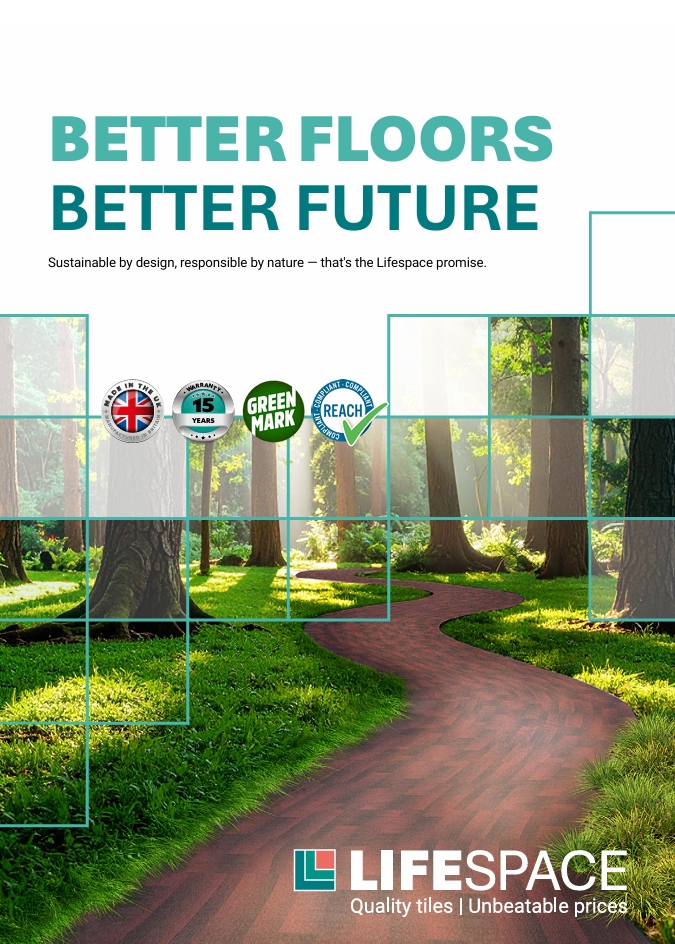
Lifespace Flooring has been named a finalist in The Flooring Show’s Sustainability Award, won by Tarkett. Discover why we are proud, how we lead in eco-innovation, and what this means for sustainable flooring.
Introduction
When innovation meets intention, recognition follows — and that recognition has come for us at Lifespace Flooring. We are delighted and humbled to announce that Lifespace has been selected as a finalist in The Flooring Show’s Sustainability Award. This is a milestone in our journey, not just a badge of honour, and we are deeply proud of it.
Being shortlisted among leading names in the flooring sector underscores our commitment to environmental responsibility, to rethinking how carpet tiles are produced, and to a future in which quality and sustainability go hand in hand. While we celebrate our placement, we also acknowledge the winner — Tarkett — whose work in circular economy and flooring innovation is widely respected.
In this blog, we explore:
- What The Flooring Show’s Sustainability Award is, and why it matters
- Why Lifespace has been recognised as an industry leader in sustainable commercial carpet tiles
- The increasing urgency of sustainability in the flooring industry
- What the future holds for sustainable flooring
- Credibility to Tarkett for their win
- A detailed FAQ to address questions readers might have
Let us share why this finalist status is so meaningful — both for us as a company, and for our clients, partners, and the wider industry.

What is The Flooring Show and its Sustainability Award?
Before we dive into Lifespace’s efforts, it helps to understand the broader context: what is The Flooring Show, and what does its Sustainability Award represent?
The Flooring Show is the UK’s dedicated event for the flooring sector, bringing together manufacturers, distributors, designers, contractors, and installations professionals. At its Harrogate venue, the show features exhibitions, demonstrations, thought leadership sessions, and a featured “Sustainability Trail.” On this trail, visitors can identify exhibitors using sustainable practices. One exhibitor is selected by judges to receive the Sustainability Award, this years crown obtained by Tarkett.
In 2024, for example, the show expanded its reach, positioning sustainability as central to the event’s narrative. The Sustainability Award specifically spotlights those manufacturers or flooring companies that go beyond compliance — whose policies, processes, goals and products embody true environmental leadership.
Thus, being named a finalist is no small feat: it means that, in the eyes of expert judges, Lifespace stands among the best in the UK flooring industry for sustainable practice.
Why Lifespace Has Been Recognised as an Industry Leader
What distinguishes Lifespace from the pack? Why did the judges take notice and place us among the finalists? In what follows, I outline the core pillars of our sustainability approach and share highlights from our work in commercial carpet tile innovation.
Strategic Vision and Commitment
From the outset, Lifespace has set out not just to supply carpet tiles, but to do so in a way that aligns with environmental responsibility. Our vision is to become the UK’s leading supplier of carpet tiles that combine performance and sustainability. That vision underpins every decision, from sourcing to production, from design to logistics.
That level of commitment matters. When a company is transparent about its goals, reports progress, and holds itself accountable, it earns credibility in the eyes of independent judges and the marketplace alike.
Sustainable Product Design & Material Selection
One of the key areas where Lifespace drives impact is in how we design our carpet tiles with sustainability in mind. Some of the principles we adhere to:
- Use of recycled or reclaimed content: Where possible, we specify yarns or backing materials that already include recycled content, reducing dependence on virgin raw materials.
- Design for durability and longevity: A sustainable product is one that lasts longer, reducing the need for frequent replacement and thus reducing resource consumption over time.
- Modular, repairable design: Because carpet tiles are modular, we can replace individual tiles rather than entire rolls. This reduces waste and conserves resources — a principle in line with circular economy thinking.
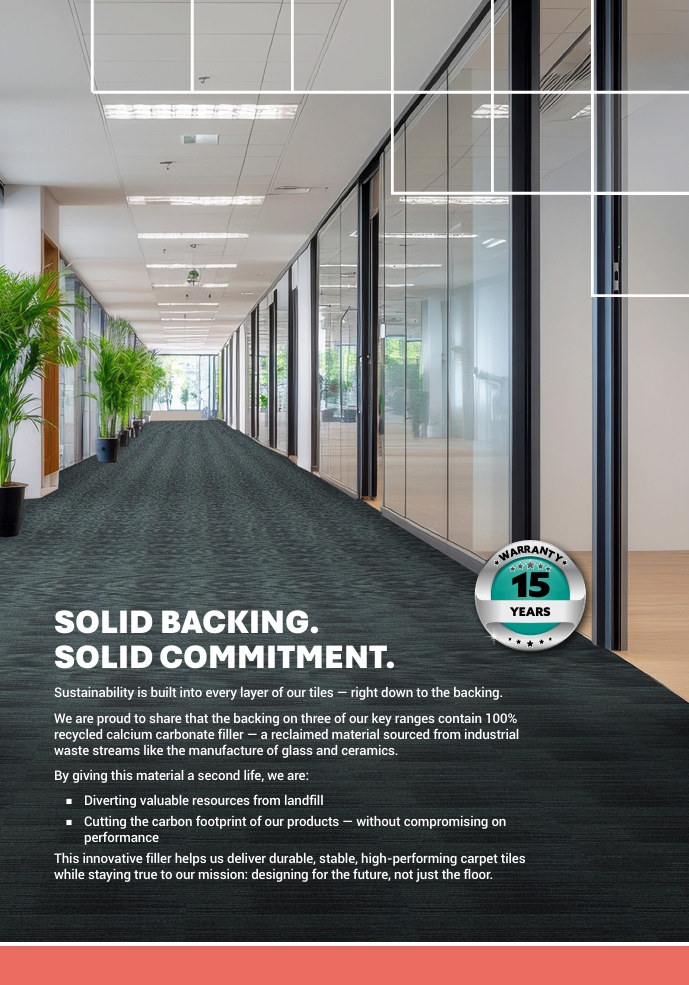
- Mindful backing systems: The backing that supports the carpet tile is often overlooked, but it is a critical part of environmental performance. We evaluate backing materials for their recyclability, emissions, and ease of disassembly.
These design decisions make us more than a commodity supplier — we’re specifiers of sustainable systems.
Ethical and Transparent Manufacturing
Sustainability is not just about the product; it’s also about how we make it. Lifespace adheres to rigorous standards of environmental management, energy use, waste reduction, and ethical supply chains.
We produce documentation and reporting that align with best practices in the sector. That includes adherence to ISO environmental management, monitoring of energy use, waste streams, water usage, and carbon emissions.
In public-facing communications, we showcase our sustainable commercial carpet tile credentials, inviting clients to understand the environmental impact of their flooring choices. For example, our Sustainability page outlines how we source and manufacturer responsibly.
Taking Responsibility for End-of-Life
One of the biggest challenges in flooring is what happens to the product at the end of its life. Many carpet systems end up in landfill or incineration, which undermines the gains made in production.
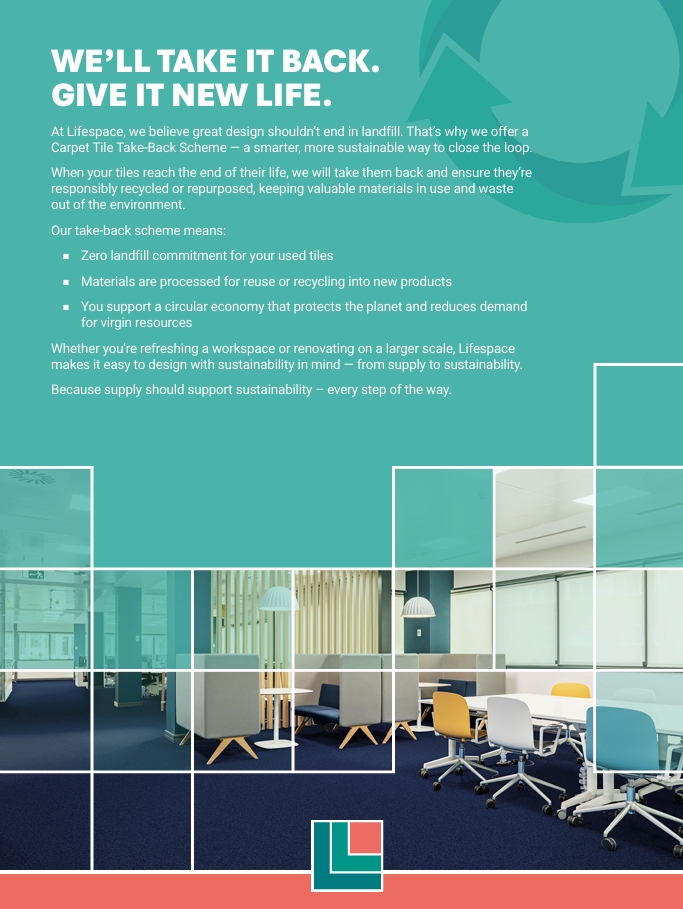
We believe a sustainable carpet tile must come with a take-back, recycling, or reuse pathway. Lifespace partakes in schemes in which old tiles can be reclaimed, cleaned, recycled, or refurbished into new products. This helps close the loop and reduces waste burden on clients.
Judges for the Sustainability Award look especially favorably on nominees that can demonstrate credible end-of-life strategies. That Lifespace is actively developing or participating in such schemes is a strong differentiator.
Ongoing Goals & Roadmap
Recognition as a finalist is not the endpoint — it is a milestone along a journey. To that end, we have a roadmap of ambitious sustainable goals for the next 5–10 years:
- Further increase the proportion of recycled or regenerative content in our product lines
- Enhance transparency in our supply chain
- Partner with existing or emerging recycling programmes to ensure used tiles are recovered
- Reduce carbon emissions
This forward-looking approach — with measurable benchmarks — is exactly what award judges seek. It shows we are not merely reactive, but proactive in shaping a more sustainable future.
Real-World Projects & Credibility
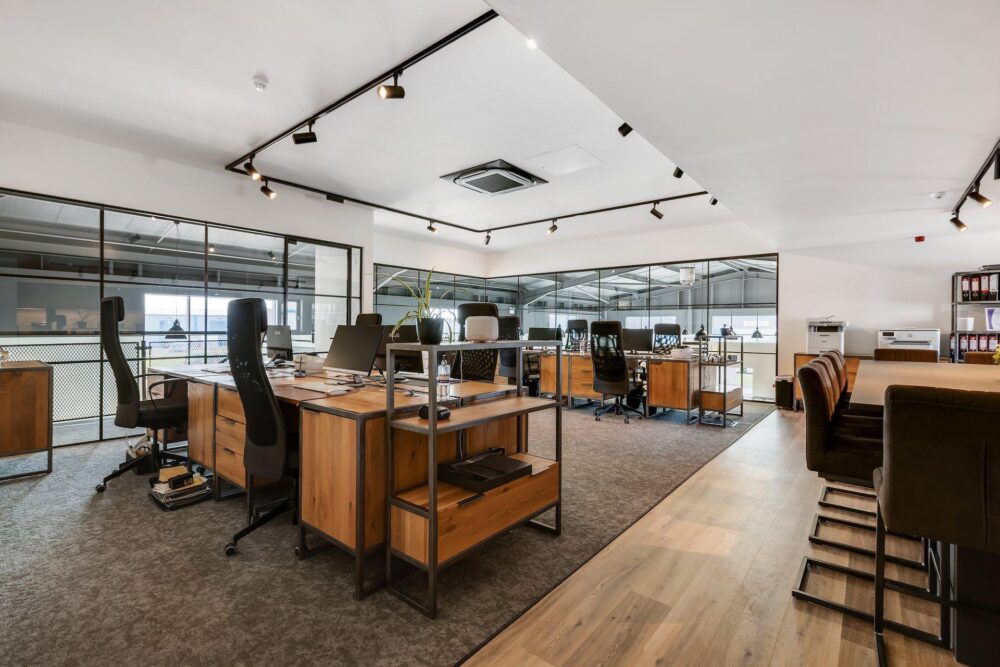
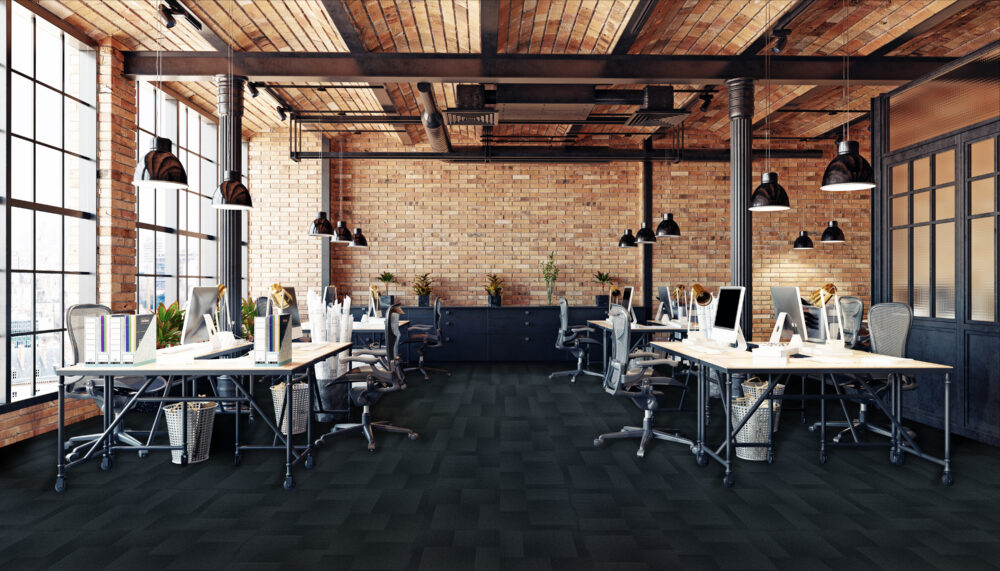
Theory and promise are important, but credibility comes when clients choose your products. Lifespace has delivered carpet tile solutions in commercial and educational settings that integrate durability, design, and eco-credentials.
Our Modern Edge, Elemental Loop, and Venetian Charm ranges, among others, offer customers high performance plus environmental features (e.g. improved backing, design flexibility). By meeting client needs while maintaining sustainable integrity, we exemplify how responsible flooring is compatible with commercial viability.
In sum, the judges recognised Lifespace as a finalist because we’re not only talking about sustainability — we’re building it into everything we do.
The Importance of Sustainability in the Flooring Industry
It is no longer optional for flooring companies to pay lip service to sustainability. The industry is evolving under pressure from regulation, client expectations, resource constraints, and climate imperatives which Lifespace and Tarkett have followed. Below are key drivers and the challenges of embedding sustainability into flooring design.
1. Environmental Impact & Carbon Footprint
Buildings and construction contribute a significant share of global greenhouse gas emissions. Flooring, as a core component of interiors, plays a role in that impact. The raw materials (fibres, backing, adhesives), energy in manufacture, transportation, installation, and end-of-life disposal all contribute to embodied carbon.
Sustainable flooring seeks to reduce this burden by choosing low-carbon materials, improving manufacturing efficiency, and enabling reuse or recycling.
This is something both Lifespace and Tarkett have adhered to.
2. Circular Economy & Waste Minimisation
Traditional flooring is often linear: make → use → discard. That model is unsustainable when resources are finite and disposal becomes costly. A circular approach emphasises design for disassembly, material reuse, take-back programmes, and minimising waste at every stage.
In carpet tile systems, modular design offers inherent advantages: fewer cut-offs, easier replacement, and potential for reclaiming individual modules rather than whole floors.
This is why carpet tiles should be your go to for commercial projects, companies such as Lifespace and Tarkett are the perfect manufacturers.
3. Regulatory & Certification Pressures
Industry standards, building codes, and certification schemes (e.g. BREEAM, LEED, WELL, SKA) increasingly require low-VOC materials, environmental product declarations (EPDs), responsible sourcing, and end-of-life planning. Clients expect flooring products to contribute positively in sustainability assessments.
If a product lacks credible third-party verified credentials, it risks exclusion from projects.
4. Client & Stakeholder Expectations
Corporate clients, educational institutions, public sector bodies and specifiers increasingly demand evidence of environmental performance. Green procurement policies are commonplace, and clients may select suppliers based on ESG metrics. A flooring company that cannot demonstrate sustainability credentials loses credibility.
5. Longevity, Maintenance & Life-Cycle Costing
A product that lasts longer, requires less maintenance, and is easier to repair or replace offers lower total environmental and financial cost over time. Sustainability is not just about materials, but about service life and resilience.
6. Competitive Differentiation & Brand Value
Brands that can credibly claim sustainable credentials enjoy reputational advantages. In a market where “greenwashing” is rampant, being a genuine leader (or finalist in awards) helps differentiate, build trust and grow market share.
Thus, Lifespace’s positioning as a sustainability finalist is not just a feel-good moment — it’s strategic, competitive, and aligned with long-term viability.
Reflecting on Tarkett’s Win and What It Means
Before we move to FAQs, it is fitting to acknowledge that Tarkett won The Flooring Show’s Sustainability Award (overall). We congratulate Tarkett for that achievement. Their work in circular flooring, recycling, and closed-loop systems is widely respected in the industry, and Tarkett set a high bar for all of us.
Let’s note some relevant aspects of Tarkett’s sustainability leadership, and how Lifespace’s recognition sits alongside theirs.
- Tarkett has pioneered closed-loop recycling in carpet tiles — working with partners like Aquafil to separate yarn and backing and recycle them into new materials.
- Tarkett DESSO Origin collection is marketed as 100 % recyclable, with among the lowest circular carbon footprints in Europe.
- Tarkett have invested in take-back programmes (ReStart®) to bring used flooring back into the product cycle.
- Tarkett’s sustainability strategy is holistic — focusing not only on materials, but energy, carbon, water, logistics, and governance.
As a finalist, Lifespace is recognised in the same conversation as Tarkett — which is testament to our ambition and credibility. We may not have won the top prize this time, but being a finalist gives us visibility, legitimacy, and impetus to keep pushing forward.
What This Finalist Status Means for Lifespace, Clients & Partners
This recognition is not just symbolic — it has practical impact:
- Credibility Boost
Being a finalist validates our claims. When clients ask “how green is your flooring?”, we can point to independent recognition. That helps differentiate us from competitors. - Momentum for Growth
It motivates our team and partners to invest further in sustainable innovation. It opens doors to new collaborations, and gives us a stronger narrative in bids and proposals. - Marketing & Storytelling Advantage
This finalist status is a story we can tell: in proposals, on our website, in trade media. It helps attract customers who prioritise sustainability. - Partnerships with Sustainability-Minded Clients
Some clients (educational authorities, public bodies) require eco-credentials in their procurement. Having this recognition helps us qualify and compete in that space. - Benchmarking & Accountability
This external validation helps us benchmark ourselves against peers. It also compels us to report, improve and strive for greater impact.
So yes — we are proud. But we are also ready to carry the momentum forward.
FAQs — Frequently Asked Questions
Below are some anticipated questions we hope this blog helps to answer.
Q1. What criteria does The Flooring Show use for the Sustainability Award?
While the show’s organisers don’t publish a full rubric, judging typically considers:
- Environmental policies and governance
- Transparency and reporting of emissions, energy, waste, water
- Product eco-credentials (recycled content, recyclability, disassembly)
- Innovation in sustainable design
- Supply chain ethics and traceability
- End-of-life strategy (take-back, reuse, recycling)
Because Lifespace meets strong standards across those categories, we were shortlisted.
Q2. How many times has Lifespace participated in The Flooring Show?
This year marked our first major entry for the Sustainability Award category. We intend to continue participating, refining and pushing forward in future shows.
Q3. What happens next in the award cycle?
After finalists are announced, the judges review submissions more deeply and choose a winner. The Flooring Show then announces the winner publicly at the exhibitor reception or in its final event schedule.
Q4. Does this recognition require disclosures or audits?
To be credible, finalists are often required to back up their claims with documentation — internal data, third-party audits, certifications, or reports. While the show itself may not independently verify all claims, it expects rigor and transparency.
Q5. How do clients benefit from choosing Lifespace products post-finalist status?
Selecting a flooring provider that is independently recognised for sustainability helps clients:
- Earn credits in green building schemes (e.g. BREEAM, LEED)
- Demonstrate ESG commitments
- Reduce lifecycle environmental impact
- Mitigate risk of future regulatory pressures
- Enhance reputational value
Q7. Will Lifespace aim to win the Sustainability Award next time?
Absolutely. Being a finalist is a milestone, not the finish line. We are using the feedback, exposure and energy from this recognition to strengthen our practices — to anticipate and meet criteria for award-winning sustainability.
Conclusion & Vision Forward
Achievement is not static; it is a journey. Lifespace Flooring’s inclusion as a finalist in The Flooring Show’s Sustainability Award is a moment of both pride and determination. It acknowledges how far we’ve come, and it pushes us further.
We congratulate Tarkett on their win, and we celebrate the rising tide of sustainable innovation in our industry. But we also celebrate ourselves — for choosing a path less traveled, investing in integrity, and believing that flooring can — and should — be better for people and planet.
To our clients, partners and prospective customers: our commitment remains unwavering. If you specify, install or design with Lifespace products, you benefit from performance, quality — and increasingly robust environmental credentials.
If you’d like to explore our sustainable commercial carpet tile ranges, talk through project applications, or hear our roadmap in more detail, we’d love to connect.
Together, we’ll walk on floors designed for the future.